AirSweep Cures Soil Bridging in a Bagging Plant Hopper
Replacing hammering, rodding and noisy vibrators
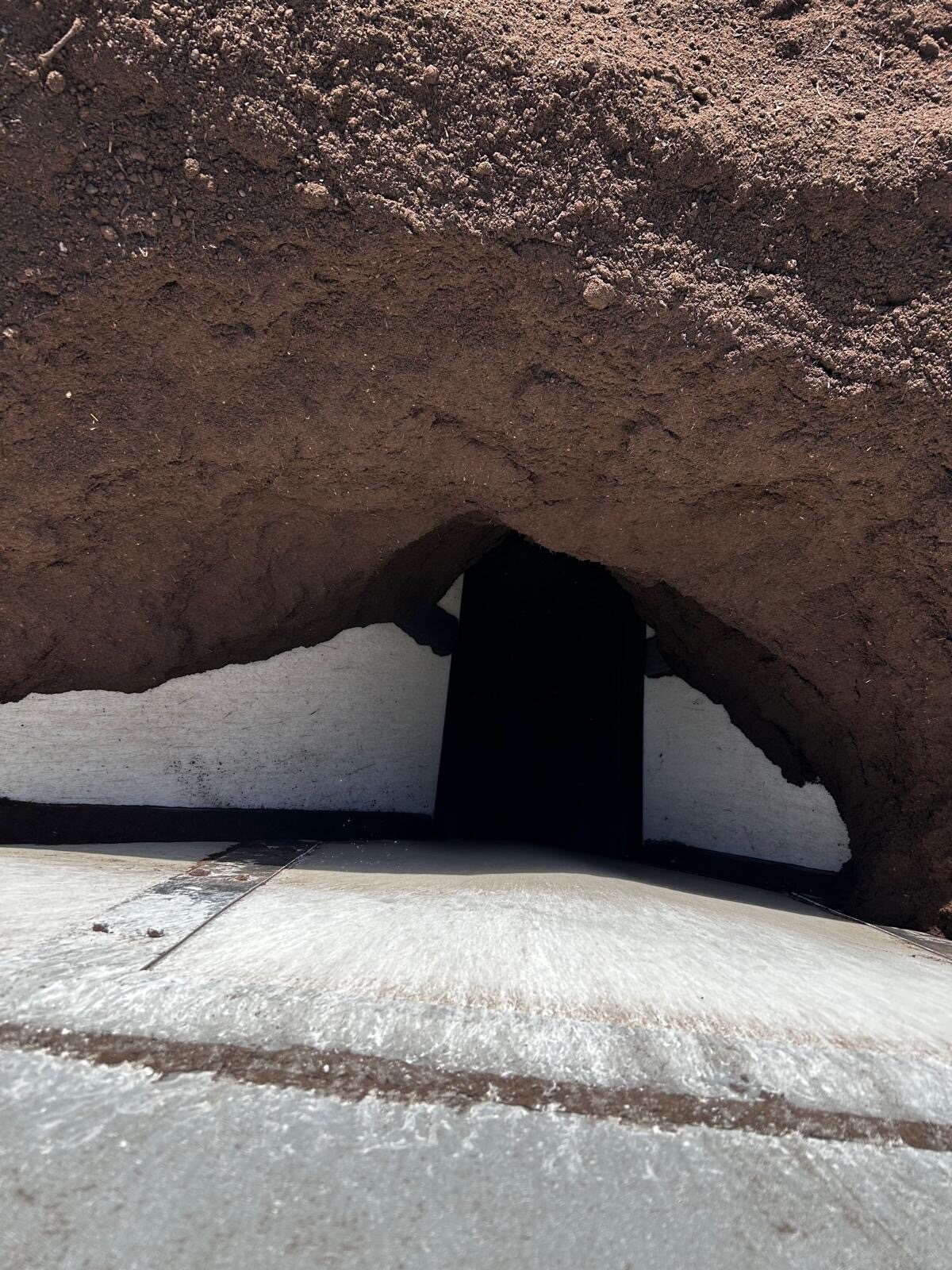
A compost and soil bagging plant had a recurring problem: soil bridging in the hopper that fed its bagging line. The blockages were worst in cold, wet weather, when the damp soil packed together and stopped flowing.
IPT Engineering studied the hopper and how it was used and, in conjunction with Control Concepts, designed an AirSweep® system to break the bridges and keep the soil moving.
The Problem
Frequent blockages, cleared by hand
Each time the soil bridged, the loader operator had to leave his vehicle and clear the blockage, either by hitting the hopper wall with a hammer or by rodding the hopper from above.
Both jobs were potentially hazardous: the material was above a moving conveyor belt feeding the bagging plant. Blockages happened often, and every one cost time while the line waited to be cleared.
Bridging worst in cold, wet weather
Loader operator leaving his vehicle to hammer or rod the hopper
Work carried out above a moving conveyor
Lost production time on the bagging line
BeforeSoil bridged over the hopper outlet, leaving a void above the feedBeforeSoil hung up in the hopper, with the loader waiting above
Why the Vibrators Did Not Work
Vibrators had already been fitted to the hopper walls, but they did not clear the problem, and may have made it worse. Vibration can compact damp, cohesive material such as soil, so the bridge becomes firmer rather than breaking.
The vibrators were also very noisy, which was a problem for the people operating the bagging plant directly below the hopper.
A system designed around the hopper and the material
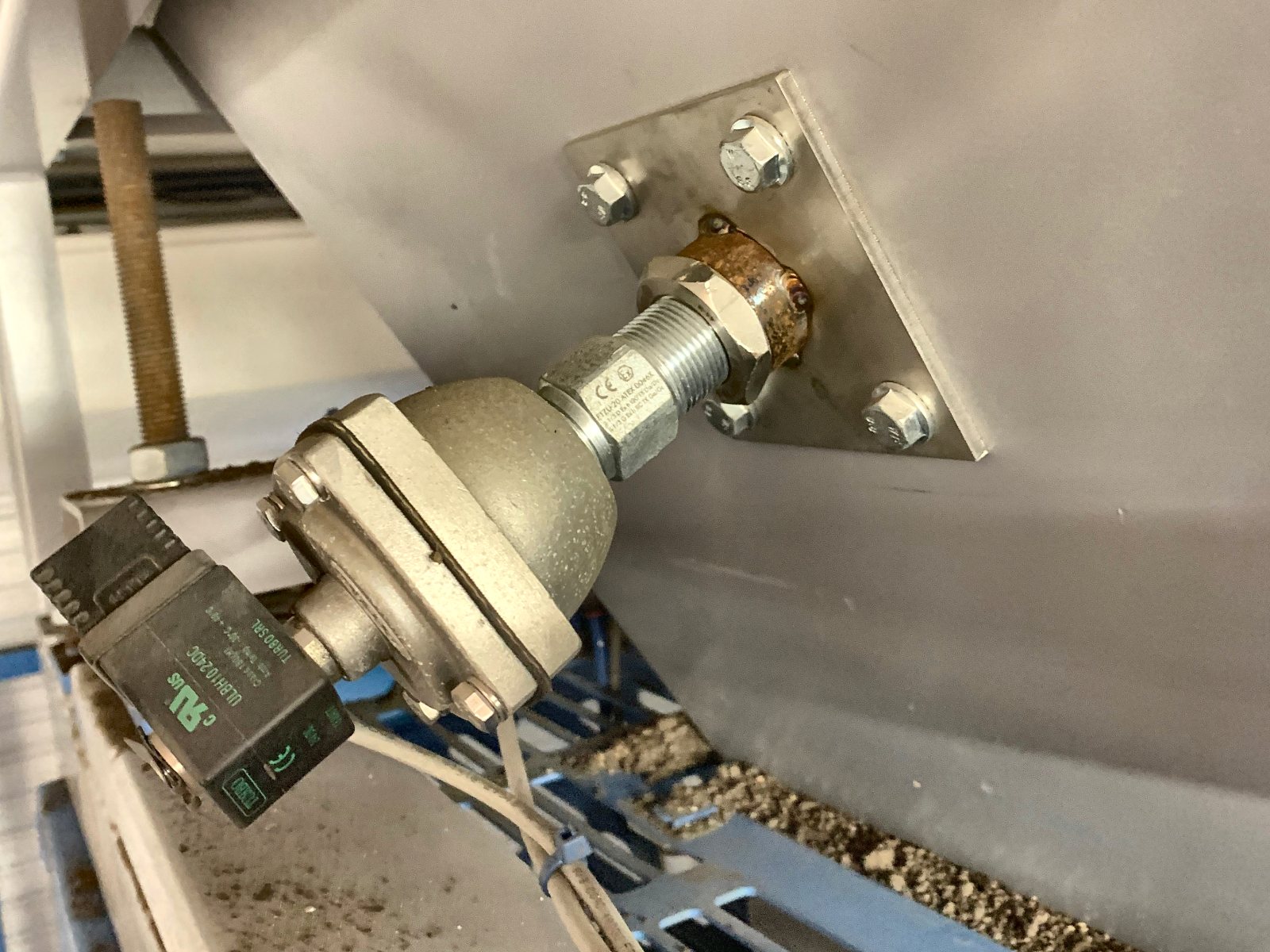
IPT made a study of the loading hopper, the way it was loaded and the materials that passed through it. From that, IPT developed a design in conjunction with Control Concepts, the manufacturer of AirSweep, using four VA-06C AirSweep assemblies, positioned on the hopper walls.
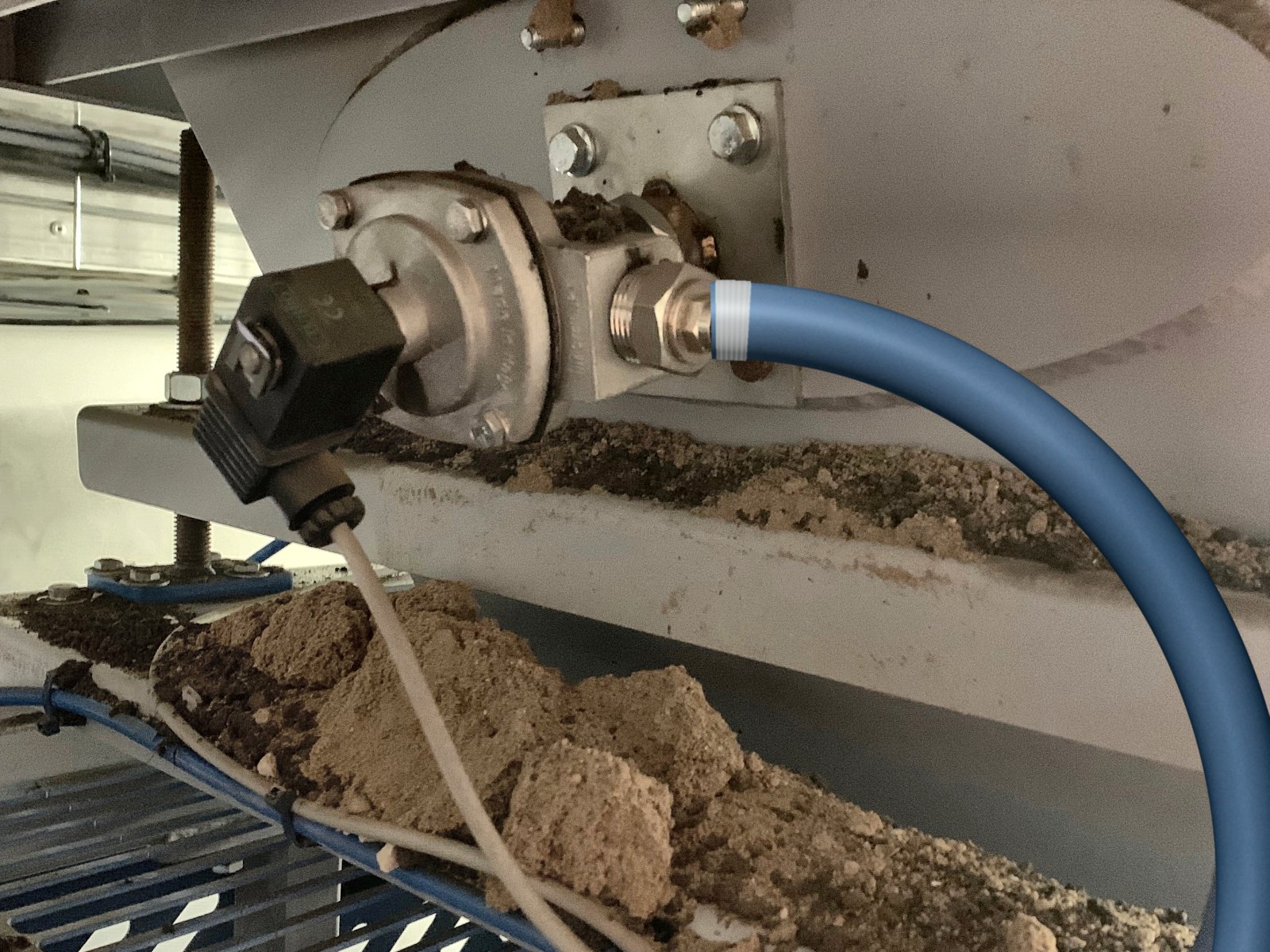
Each 3/4 inch nozzle is fitted through the hopper wall, with its own pulse valve outside the hopper fed from the plant air supply by a 3/4 inch hose. A controller fires the nozzles in sequence.
Each short pulse of air sweeps along the inside of the hopper wall, breaking the friction between the soil and the steel and lifting stalled material back into the flow. There is no vibration, and each pulse is a short hiss rather than the constant noise of a vibrator.
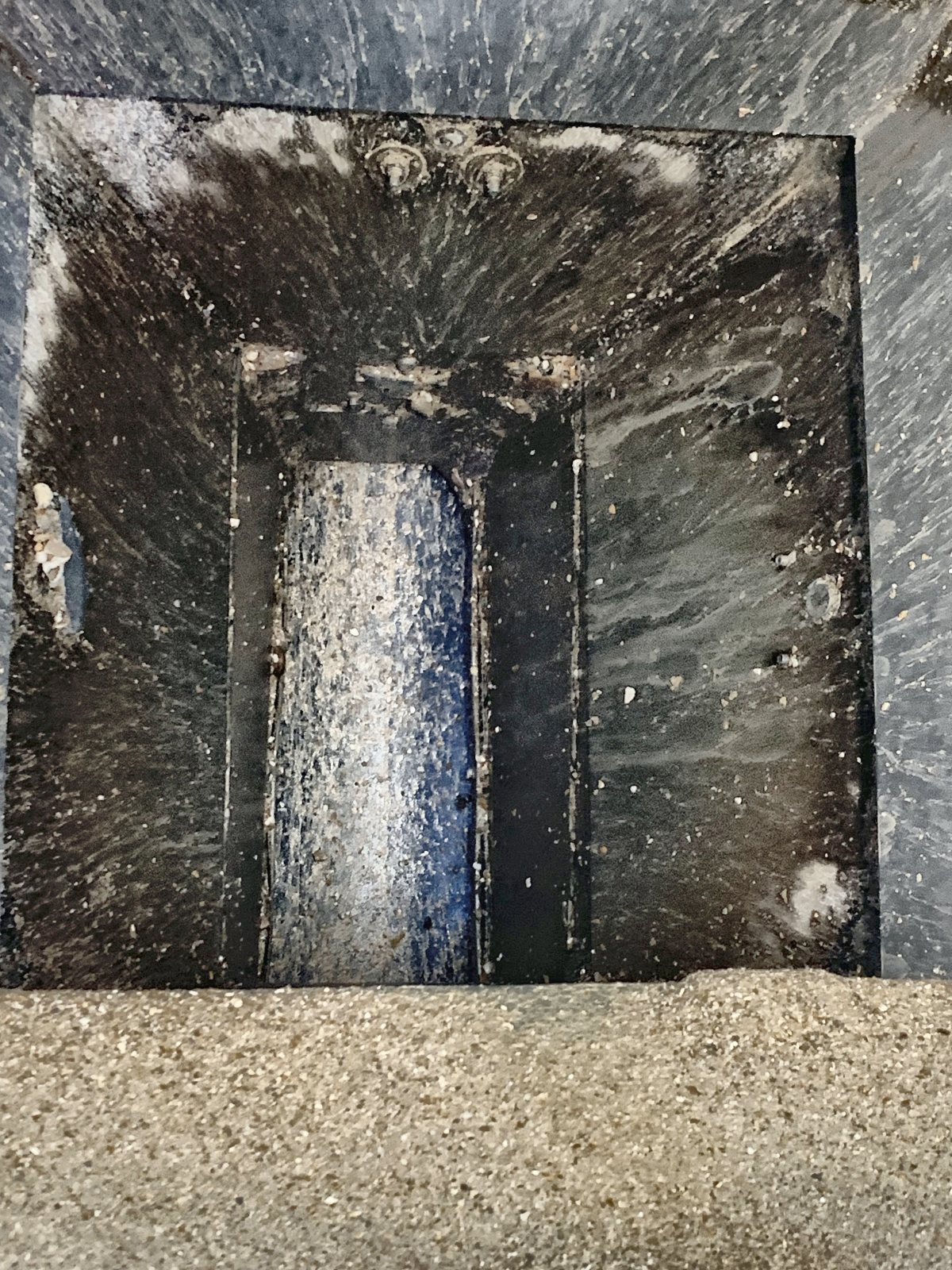
Pulse valve on the hopper wall, fed by a 3/4 inch air hoseOne of the four VA-06C AirSweep assemblies, mounted through a bolted plateAfterHopper walls swept clean and the soil flowing freely to the outlet
The Result
The material keeps flowing
The AirSweep system breaks up the bridges and keeps the soil flowing to the bagging line, with minimal compressed air use and no noise problem for the people working below.
Bridging broken up as it forms, so the material keeps flowing
Improved operational availability of the bagging plant
Minimal compressed air use
No noise or vibration problem for the bagging plant operators
No more hammering or rodding the hopper, and no work above the moving conveyor
The loader operator stays in his vehicle
Have a Hopper That Blocks?
If your silo or hopper bridges, ratholes or needs hammering to keep it moving, tell us about it and we will propose an AirSweep system with Control Concepts.
AirSweep® is a registered trademark of Control Concepts USA.