AirSweep®: Cure Blocked Silos and Hoppers

AirSweep systems from the UK agent for Control Concepts USA

IPT Engineering is the UK agent for Control Concepts USA, the manufacturer of AirSweep®. You tell us the problem, and with Control Concepts we design an AirSweep system to cure it.

Not sure why your silo or hopper keeps blocking? Our silo and hopper bridging guide explains bridging, ratholing and the options for fixing them.

AirSweep is used for three kinds of problem:

Check if AirSweep works with your material

Control Concepts lists these among the materials AirSweep has handled successfully, together with those from the case studies on this page:

Foods

  • Animal feeds
  • Brewers' grain
  • Brine (dust)
  • Chocolate and cocoa powder
  • Coffee
  • Flour
  • Grains
  • Ground flax
  • Hops
  • Infant formula blends
  • Maize (corn)
  • Masa flour
  • Meal (including meat meal)
  • Oat hulls
  • Rice bran
  • Salts
  • Spices and seasonings
  • Starch
  • Sugar
  • Whey protein

Mined

  • Alumina-based minerals
  • Aluminium
  • Barite
  • Bentonite
  • Borax
  • Coal (coke, mine run, silt, pulverised)
  • Copper
  • Copper concentrate
  • Diatomaceous earth
  • Gypsum
  • Lead
  • Limestone
  • Magnetite
  • Phosphate
  • Sand, including damp sand
  • Shale
  • Soda ash
  • Trona
  • Uranium

Chemicals

  • Activated carbon
  • Adipic acid
  • Aluminium chloride
  • Boric acid
  • Calcine
  • Calcined gypsum
  • Calcium carbonate
  • Carbon black
  • Chlorine
  • Herbicides
  • Hydrated lime
  • Iron oxide
  • Lead chromate
  • Lithium carbonate
  • Polyacrylamide
  • Sodium sulphite
  • Titanium dioxide
  • Zinc

Other

  • Acetate
  • Asphalt aggregates
  • Cement clinker
  • Cements
  • Chalk
  • Compost and soil
  • Cork
  • Deicing salt pellets
  • Detergents
  • Fertiliser
  • Fly ash
  • Foundry sand
  • Pharmaceuticals
  • Plastics
  • Resins
  • Sludge
  • Tobacco
  • Wax flakes and pellets

Not listed? Tell us your material in the quick quote box below and we will check it with Control Concepts.

Get a quick AirSweep quote

Three details are enough to start. We will come back with a proposed system and ask for anything else we need.
Quick quote

Have drawings or full details? Use the full enquiry form further down.

Where We Have Supplied AirSweep

We have supplied AirSweep systems across very different industries and materials, including:

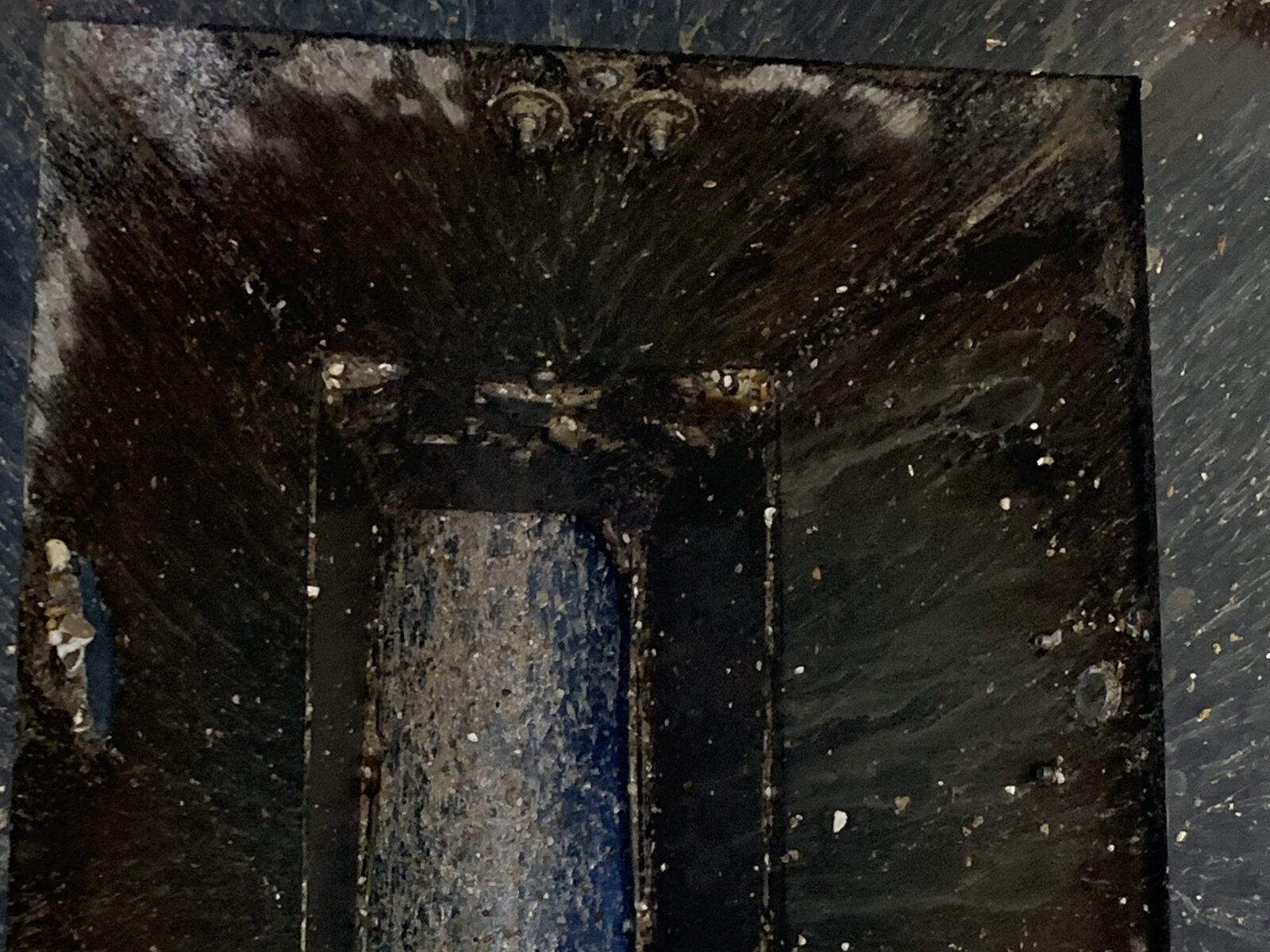
Once fitted there is little to see: outside the vessel, a valve mounted on the wall; inside, only the head of the nozzle, sitting flat against the vessel side.

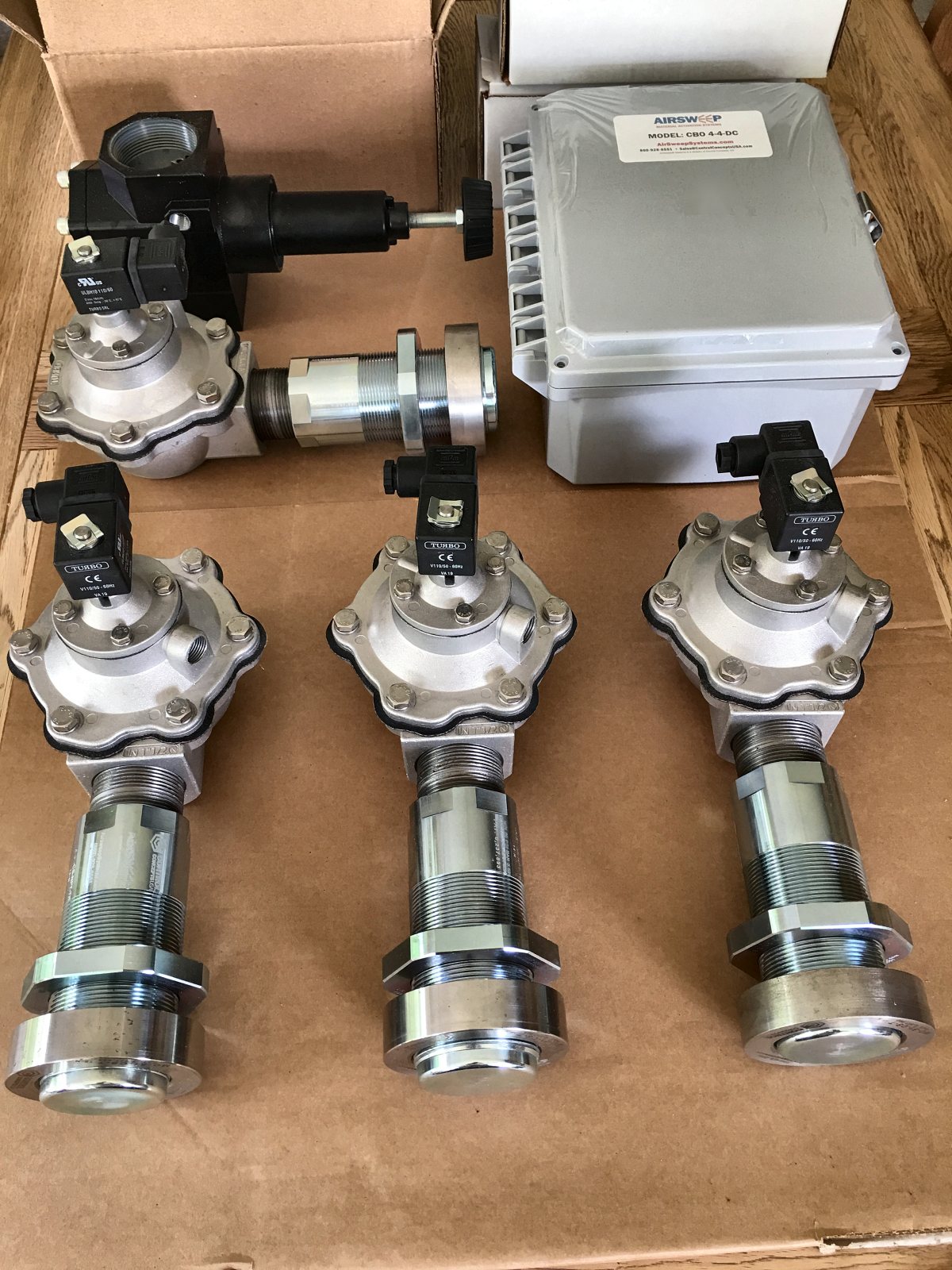
AirSweep system ready for dispatch: four VA-51 nozzles with pulse valves, air regulator and CBO controller
System supplied for a carpet tile manufacturer: four AirSweep nozzles with pulse valves, an air regulator and a four-output controller
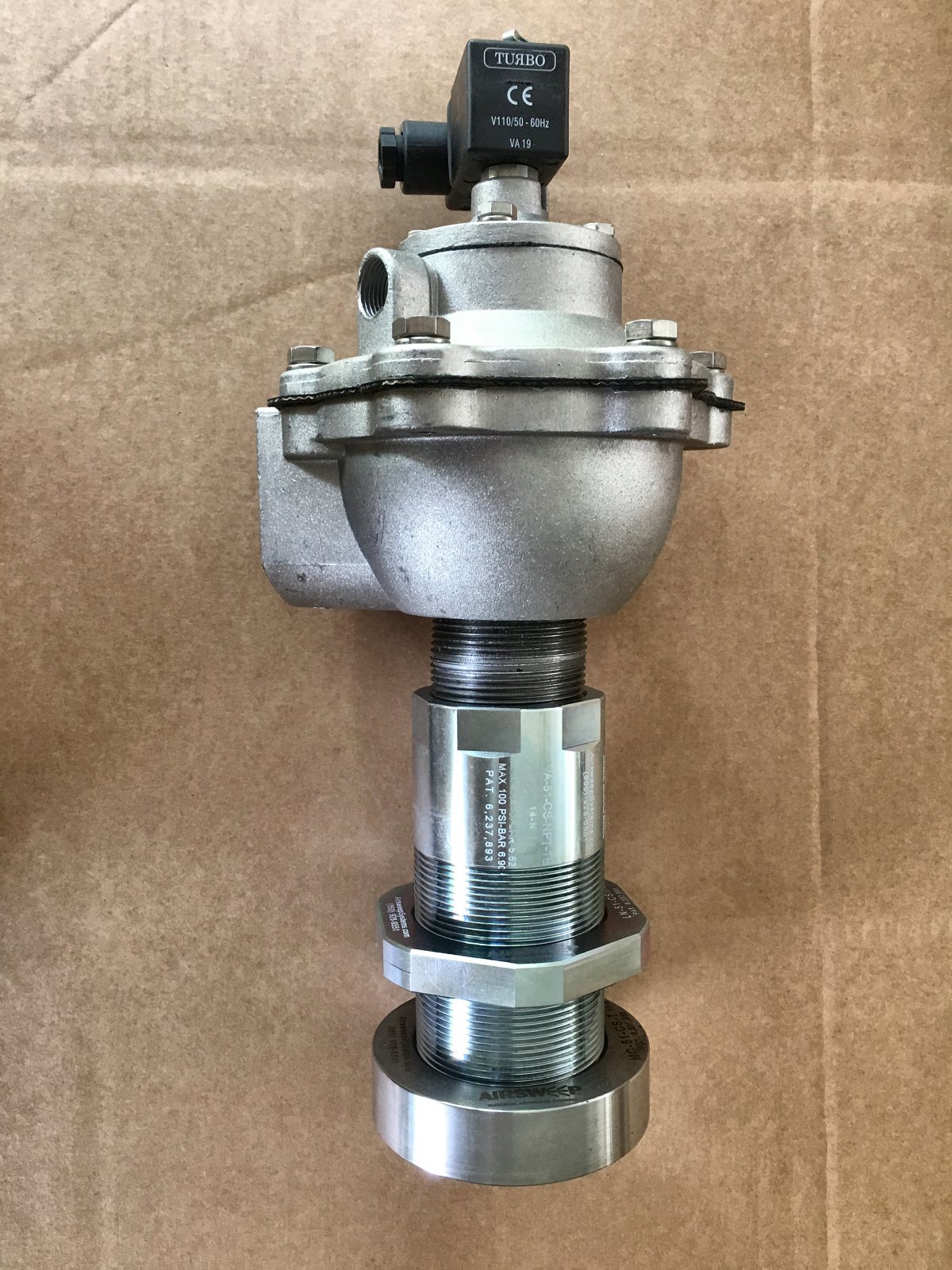
AirSweep VA-51 nozzle assembly with mounting coupling and pulse valve
A 2 inch VA-51 AirSweep with its mounting coupling, lock nut and pulse valve
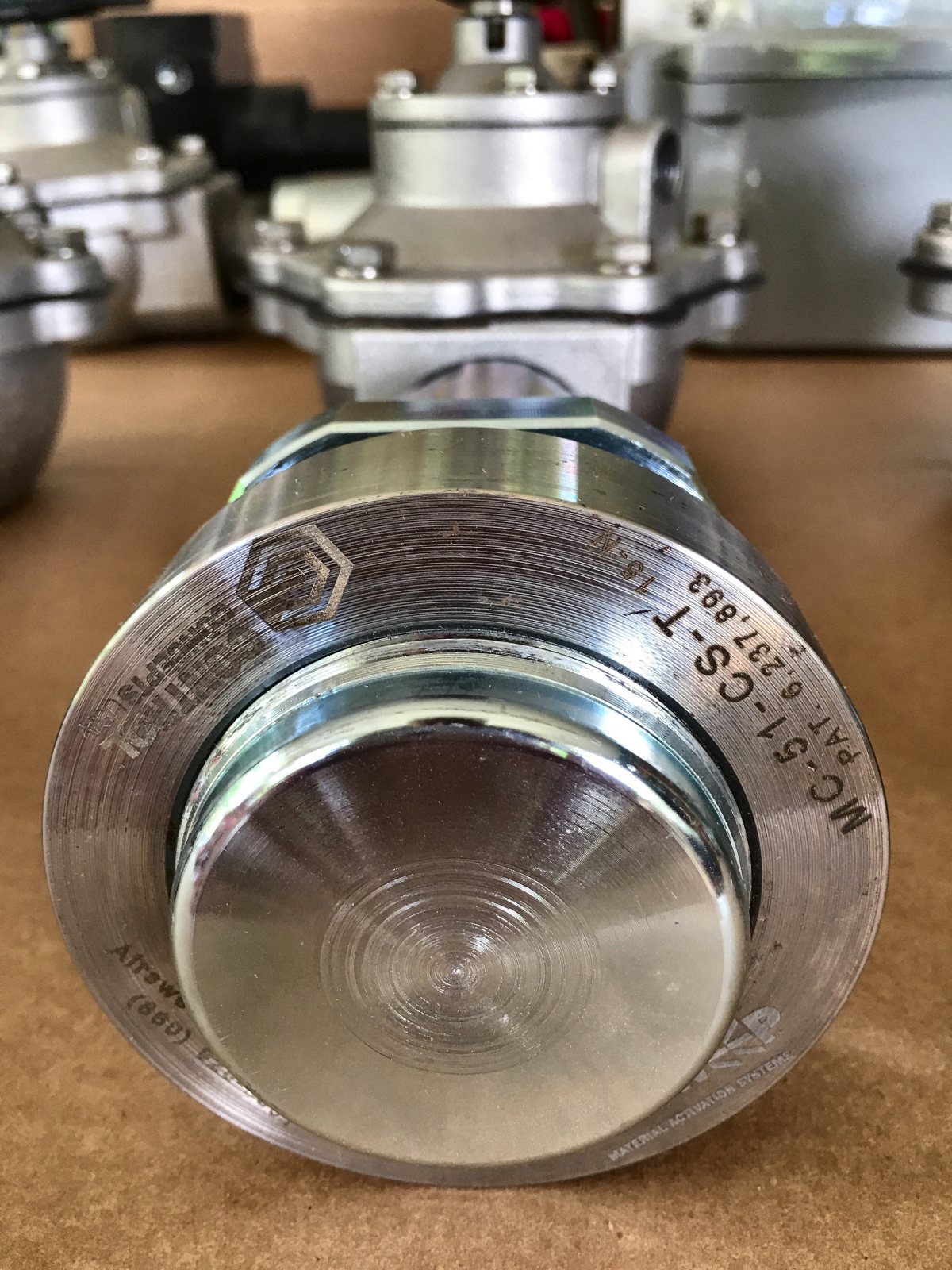
Face of an AirSweep VA-51 nozzle head and mounting coupling
The nozzle head: the only part seen inside the vessel

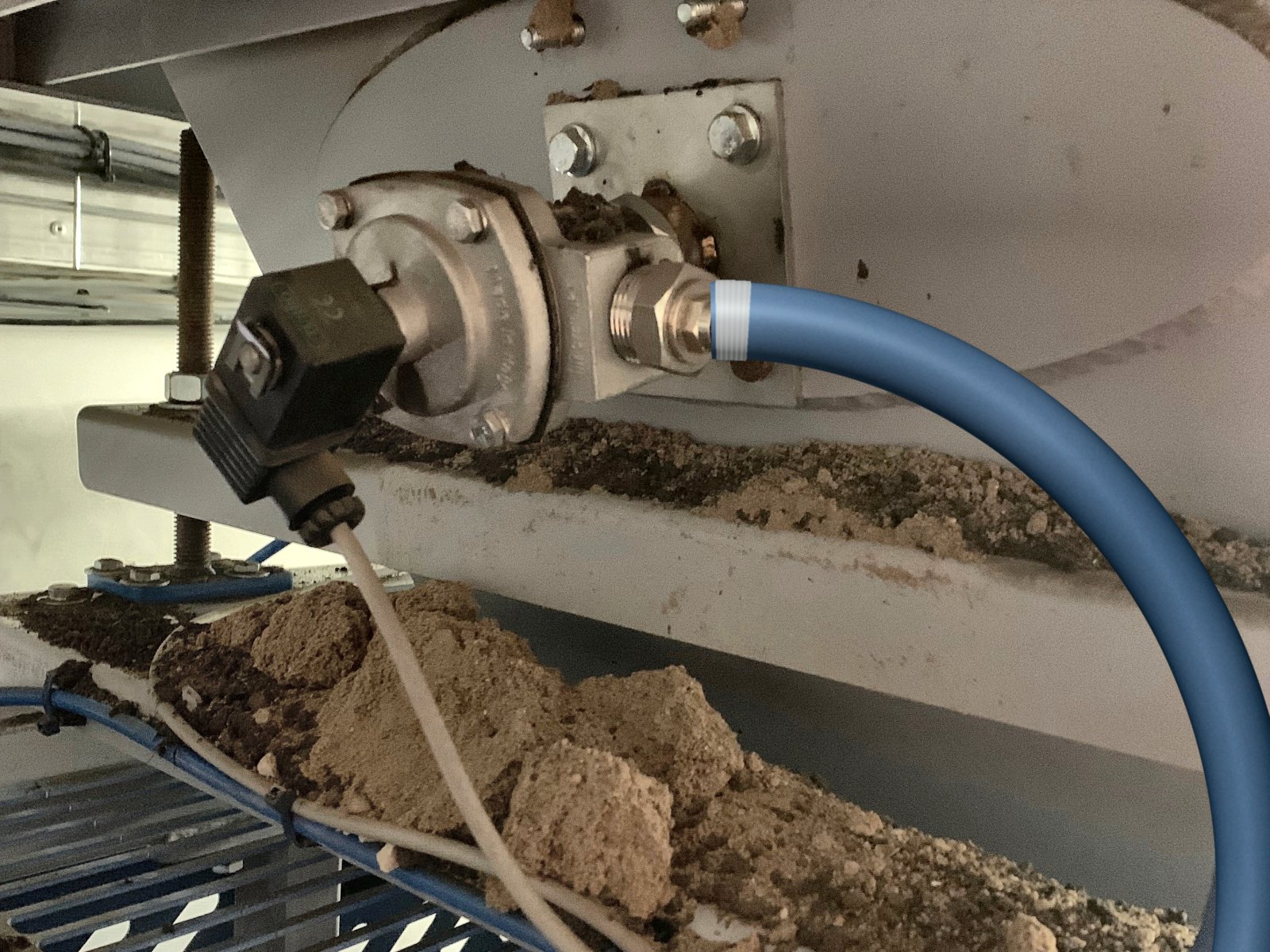
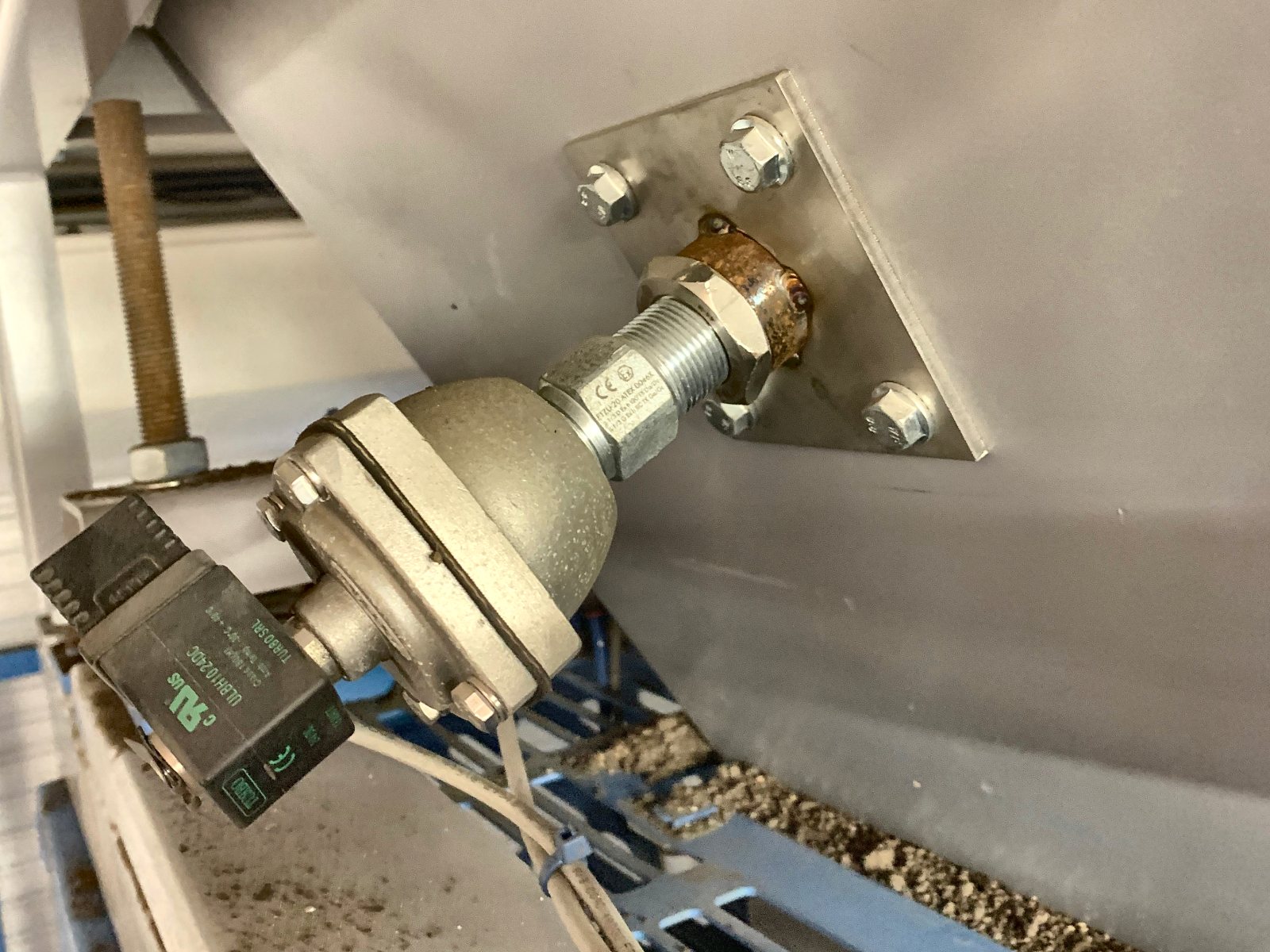
A UK installation. Fitted to a hopper, each nozzle is mounted through a bolted plate, with its pulse valve fed by a 3/4 inch air hose. Inside, the nozzle head lies flat against the hopper wall, out of the way of the material. Read the soil hopper case study.

AirSweep pulse valve on a hopper wall with 3/4 inch air supply hose
Pulse valve on the hopper wall, fed by a 3/4 inch air hose
AirSweep nozzle, lock nut and pulse valve mounted on a hopper wall plate
Nozzle mounted through a bolted plate on the hopper
AirSweep nozzle head inside a hopper, flush against the wall
Inside the hopper: the nozzle head sits flat against the wall

How an AirSweep System Works

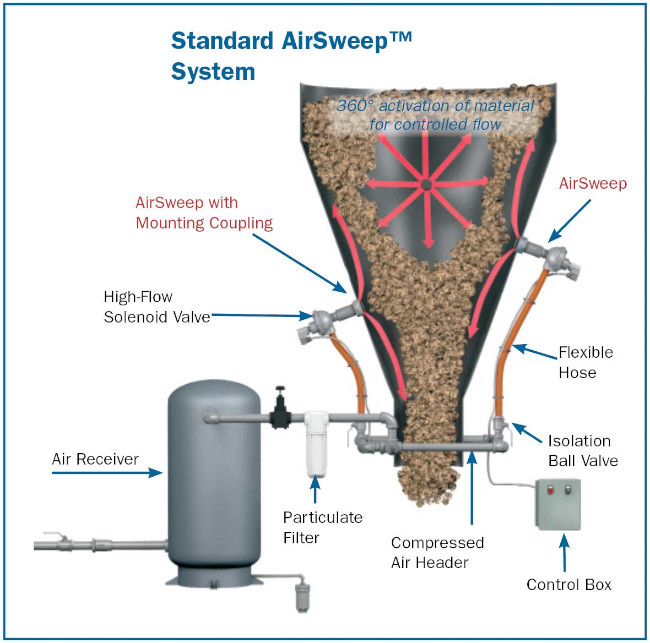
Compressed air or inert gas from the plant supply, at 80 to 100 psi (about 5.5 to 7 bar), is stored in a receiver close to the vessel. On a timed sequence, a high-flow valve releases a short, powerful pulse, typically a quarter of a second, through each AirSweep nozzle.

The nozzle directs the air in a 360-degree sweep along the inside of the vessel wall. This breaks the friction between the material and the wall, and lifts stalled material back into the flow. The nozzle then reseals immediately, so material cannot get back into it. One nozzle can activate material over a circle up to 2.4 m (8 ft) across.

The nozzles are pulsed one after another while the vessel discharges, or on demand, for example as a gate opens. Because each pulse is so short, air use is low: as little as 10 CFM (about 0.3 m³/min).

AirSweep: A Quick Look (3 min 38 s). Video by Control Concepts.

AirSweep system layout: air receiver, filter, header, isolation valves, flexible hoses, high-flow solenoid valves, nozzles on the hopper and control box

A typical system has an air receiver and filter, a compressed air header, isolation valves and flexible hoses to each nozzle, and a control box that sets the pulse sequence. Nozzles can be mounted on metal, concrete, fibreglass and wooden vessels, and are serviced from outside.

The AirSweep Range

Nozzle sizes for different vessels and duties

Nozzles are available in carbon steel and stainless steel. Each is supplied with a mounting coupling and lock nut, and can be supplied with its solenoid valve. We select the model, number and position of nozzles with Control Concepts to suit your vessel and material.

Control Concepts gives a 7-year warranty on the AirSweep unit. Nozzles need inspecting about every six months, with parts replaced after around a million cycles.

Proven Across Industries

AirSweep results from Control Concepts

AirSweep is used by more than half of S&P 500 companies. These Control Concepts installations show the kind of problems it cures, from heavy minerals to food-grade powders.

Bulk bag filling

Minerals processing

Problem: Alumina-based minerals, from fine powder to small pebbles, plugged the outlets of bins with 70 to 75 degree cones. Filling one bulk bag took an hour, and operators were hammering the bins.

AirSweep: Four VA-12 nozzles per bin, pulsed one at a time every 15 seconds while discharging, using under 8 CFM at 80 psi.

Filling time cut from one hour to two minutes. Plugging eliminated, and the system extended to 16 more bins.

Blender cleaning between batches

Food ingredients

Problem: Ribbon blenders were flushed with flour between custom spice and seasoning batches, a slow and labour-intensive clean-out.

AirSweep: Eight VA-12 Tri-Clamp nozzles, four on each side of the blender, about 0.3 m above the bottom.

62% less flushing flour and 42% less labour, saving around $200,000 in flush material alone.

Dry mix bins

Pet food manufacturing

Problem: Meat meal, ground grain and mineral blend at about 7% moisture bridged above the slide gates. Vibrators and pneumatic hammers had not worked, so operators climbed to the bins with sledgehammers.

AirSweep: Three VA-12 nozzles per bin, pulsed for a quarter of a second every 20 seconds for first-in, first-out flow. A VA-06 in stainless steel clears kibble fines during automated clean-outs.

Vibrators and hammers replaced, and more of the site's bins being converted to AirSweep.

Damp powder in lined chutes

Lithium processing

Problem: Lithium carbonate at 10 to 25% moisture stuck in PTFE-lined drop chutes, and hammers were used to keep it moving.

AirSweep: 24 VA-06 nozzles fitted with the Outside-In mounting coupling, so the lined chutes did not need welding or bolting.

The plant's filling target was reached, hammering stopped, and further systems have been ordered.

Moist sand in a batching bin

Ready-mix concrete

Problem: Damp sand bridged above the bin outlets, delaying truck filling. Vibrators and jogging the gates did not cure it.

AirSweep: One 2 inch VA-51 nozzle above the outlets, pulsed by the batch control each time the gate opens.

Sand flows on demand, trucks leave on schedule, and nobody climbs the ladder to poke it out.

Oily ingredients at a bakery

Food manufacturing

Problem: Ground flax and cocoa powder, oily and poor-flowing, bridged above the discharge and caked the receiver walls up to the filter bags. Vibrators packed the flax solid, fluidisers did not help, and up to 40 lb of mix was thrown away each day.

AirSweep: Six VA-06 nozzles, in pairs at the top, middle and bottom of the hopper.

90% of the material retention problems solved, less waste, faster production, and no more climbing in to clean the receiver.

Asphalt aggregate silos

Construction materials

Problem: Aggregates and sand settled and compacted in the silos, especially over weekends. Vibrators packed the material harder, and workers had to hammer the silos or climb 7 m down inside to clear them.

AirSweep: Eight 2 inch VA-51 nozzles for first-in, first-out flow, after a free trial. A metal sheet was added to the concrete cones.

A four-year problem solved in two weeks. Less build-up, noise and energy use, and no more hammering.

Sticky whey powder

Dairy and food processing

Problem: Whey protein concentrate, high in moisture and fat, bridged over the discharge. Caked material had started a fire in a baghouse, and the fix had to meet USDA food standards.

AirSweep: Six USDA-accepted AirSweep USDA 135 units in the baghouse hopper and drop tube, mounted on couplings.

No bridging since installation, and the company is fitting AirSweep at its other US factories.

Show 9 more AirSweep results

Deicing pellets

Aviation services

Problem: Salt blended with binder and additives into deicing pellets for airports. The materials are hygroscopic, so they clumped and hardened in the bins. Gentle vibration was not going to shift them.

AirSweep: VA-06 nozzles on the surge, receiving and other bins and a cyclone, and VA-12 nozzles on the baghouse, each placed to suit the vessel size and angle.

“A 100% difference to our materials flowing.” More units ordered for other sites.

Rice bran for bulk bags

Food ingredients

Problem: Rice bran clumped in the hoppers and silos. Workers hammered the vessels, which was noisy, dented the equipment and risked injury, and a new bulk bag filling station needed reliable flow.

AirSweep: Four VA-06 nozzles, 90 degrees apart on the sloped walls, screwed into ready-fitted couplings and connected to the existing air and power.

No clumping, no dents and no hammering. The same system has since cured a masa flour cyclone.

Carbon black weigh hoppers

Carbon black manufacturing

Problem: Carbon black bridged over the outlets of critical weigh hoppers, starving the downstream machines and shutting down production. Vibrators did not work.

AirSweep: Three VA-51 nozzles on a weigh hopper, retrofitted in under 48 hours.

On-demand flow in less than a week, and more AirSweep units being fitted across the plant.

Infant formula clean-down

Infant nutrition

Problem: Formula blends high in fat, sugars and proteins clung to vessel walls, risking cross-contamination between batches. Cleaning relied on long flushing and manual work.

AirSweep: AirSweep USDA 135 and 185 units and Straight Shooters in blenders, vacuum receivers, sifters and packaging vessels, pulsed during and after each run.

Cleaning cut from 40 hours to 10, better blend uniformity, and the system rolled out to four more plants worldwide.

Hot cement clinker

Cement production, Spain

Problem: Hot, sticky, abrasive clinker clung to a tube and chute. Two air cannons had not cured it, and operators were still breaking the material with a bar.

AirSweep: Two 2 inch VA-51 nozzles in place of the air cannons, fitted in one day with no changes to the vessel.

“The AirSweeps worked perfectly.” 13 more units ordered for the company's other plants.

Shale in a humid climate

Cement production, Philippines

Problem: High humidity made shale hang on the wall of a 5.6 m silo that needed 25 to 30 tonnes an hour. Knockers, vibrators and constant hammering had not cured it, with downtime estimated at $12,000 an hour.

AirSweep: Twelve 2 inch VA-51 nozzles around the silo. Fitting and testing took under 8 hours.

A years-old problem solved in four days. Faster, steadier flow, less noise, and an estimated half the energy of knockers and vibrators.

Copper concentrate chutes

Mining, Africa

Problem: Fine copper concentrate (copper, sulphur and silica) clogged the chutes from the storage bins to the furnace. Vibrators damaged the walls, and workers spent two hours a day clearing the chutes. Air cannons were judged too loud and unsafe.

AirSweep: An AirSweep system on the chutes, with simple installation.

Performance exceeded expectations, and the company plans to fit more chutes.

Fly ash bins at ready-mix plants

Concrete production

Problem: Sticky fly ash bridged and packed at the bin outlet, halting production. Aerators had not freed it, so operators had to poke the bin by hand.

AirSweep: Four AirSweep units at different levels on the bin, fitted from outside while about 8 tonnes of fly ash was still inside. Plant air at about 7.2 scfm at 90 psi, pulsed every 20 seconds.

“Production went from zero percent to 100 percent overnight.” Output up 60%, and more bins fitted at the company's other plants.

Carbon black for tyres

Tyre manufacturing

Problem: Carbon black bridged above the discharge of a weigh hopper, delaying batches, and coated the vessel so some batches failed quality tests and were thrown away. Fluidisers were ineffective.

AirSweep: Two 1½ inch VA-12 nozzles on the weigh hopper, pulsed in a set sequence, using less air than the fluidisers that ran continuously.

Smooth, continuous flow, better batch uniformity, lower energy use and less waste. Now used at several plants in the USA and Canada.

Have a similar problem? Tell us about your vessel.

Silo Bridging, Ratholing and Blocked Hoppers

Why bulk material stops flowing

Bridging (or arching) happens when material forms a stable arch over the outlet, so nothing discharges even though the vessel is full. Ratholing is when material flows only through a narrow channel above the outlet, leaving stagnant material packed around the walls.

Common causes include:

Typical warning signs are erratic or stopped discharge, people hammering on the vessel, less usable capacity than the vessel should hold, and old material lingering in the vessel.

The right silo bridging solution depends on the material, the vessel and how the problem shows itself. The comparison below sets out the main options, and our soil hopper case study shows AirSweep curing a blocked hopper in practice. For causes, diagnosis and every fix option, see our silo and hopper bridging guide.

Ways to Fix a Blocked Silo

How AirSweep compares with other flow aids

Several types of flow aid are used to cure bridging and ratholing. The right choice depends on the material, the vessel and the problem.

Flow aidHow it worksPoints to consider
Air cannonsRelease a large blast of air at intervals to break up heavy build-ups, often in large vessels.Effective on heavy accumulations; can be noisy, and the blast is localised.
VibratorsShake the vessel wall to dislodge material.Simple to fit, but loud; repeated shaking can fatigue welds and metal, and some materials compact further, making the problem worse.
Fluidisers and aeration padsLow-pressure air through flexible discs or pads aerates the material near the wall.Suited to light, dry powders; each unit covers a small area, so many may be needed; disc material can wear and get into the product.
HammeringOperators strike the vessel to free the material.No equipment cost, but dents and damages the vessel, takes labour, and risks injury.
Live-bottom bin dischargersMechanically drive material out of the base of the vessel.Positive discharge, but usually a larger investment, with moving parts and changes to the vessel.
AirSweepShort, high-volume 360-degree air pulses sweep material off the wall and back into the flow.No vibration or wall stress; a quiet hiss rather than a loud blast; low air use; each nozzle covers up to 2.4 m; works on damp, sticky and heavy materials as well as powders; supports batch cleaning; 7-year warranty.

AirSweep can be a replacement for air cannons, fluidisers, vibrators and live-bottom dischargers. If you already have one of these and it is not solving the problem, tell us what is fitted.

AirSweep vs Vibrators

  • Vibrators shake the whole vessel from outside; AirSweep activates the material from inside, along the wall
  • No vibration, so no weld or metal fatigue on the vessel
  • A quick, quiet pulse instead of noise carried through the whole building
  • Does not compact the material, and clears the walls so build-up does not force shutdowns for cleaning
  • Fully clears each batch for first-in, first-out flow without cross-contamination

AirSweep vs Fluidisers

  • Fluidisers suit light powders such as flour; AirSweep also handles moist, sticky and heavy materials
  • One AirSweep nozzle covers up to 2.4 m (8 ft) of material, where fluidisers clear a small radius each
  • Only the nozzle tip touches the product: no rubber discs to wear and contaminate it
  • Low air use, and nothing to fit or maintain from inside the vessel
  • Quiet in operation, and USDA-accepted models are available for food

Comparisons are based on Control Concepts' published information.

AirSweep Questions

How do you stop silo bridging?

Bridging is stopped by keeping material moving along the vessel wall, so a stable arch cannot form over the outlet. AirSweep does this with short 360-degree air pulses from nozzles fitted around the cone, sweeping material off the wall and back into the flow. The number and position of nozzles depend on the vessel and the material; send us the details and we will propose a system.

Will AirSweep damage my silo or hopper?

No. AirSweep does not vibrate the vessel, and it can be fitted to metal, concrete, fibreglass and wooden vessels.

What powers an AirSweep system?

Compressed air or gas from the plant supply at 80 to 100 psi (about 5.5 to 7 bar), stored in a receiver and released in short pulses by a high-flow valve on a timed sequence. AirSweep uses less plant air than fluidisers and air cannons.

Is AirSweep noisy?

No. Many flow aids are loud, but an AirSweep pulse makes a quiet hissing sound. It also removes the need for hammering on the vessel.

How is AirSweep maintained?

Each nozzle has one moving part and is serviced from outside the vessel; it can be inspected and removed without tools. Nozzles need inspecting about every six months, with parts replaced after around a million cycles, and rebuild kits are available.

How much compressed air does AirSweep use?

Very little, because each pulse lasts only a fraction of a second. A system can use as little as 10 CFM (about 0.3 m³/min). In one Control Concepts installation, four nozzles on a 200-ton bin used under 8 CFM at 80 psi.

What warranty does AirSweep have?

Control Concepts gives a 7-year warranty on the AirSweep unit.

Can AirSweep be fitted without welding?

Yes. The Outside-In mounting coupling attaches nozzles without welding or bolting, for example on lined chutes. Standard nozzles fit into a coupling welded or bolted to the vessel.

What can I see once it is installed?

Very little. Outside the vessel there is a valve mounted on the wall; inside, only the head of the nozzle, sitting flat against the vessel side.

Can AirSweep clean a vessel between batches?

Yes. It can be used to clear a vessel between different materials or product runs, reducing flushing and manual cleaning.

Is it suitable for food production or ATEX areas?

AirSweep is USDA-accepted, and Tri-Clamp models are available for hygienic applications. For ATEX areas, tell us the zone and we will confirm a suitable configuration with Control Concepts.

How is a system designed?

Send us details of the vessel, the material and the problem. With Control Concepts we work out the number and position of nozzles, the air supply and the controls, and propose a system.

Tell Us About Your Silo or Hopper

We will propose an AirSweep system

Fill in what you know. Fields marked * are needed. For a full proposal, open the application details as well. A drawing or sketch of the vessel with dimensions, and photos, help most: attach them once your email or WhatsApp opens.

The problem
Your details
Full application details (optional, helps us quote)

These follow the Control Concepts application data sheet. Fill in what you know; we will ask about the rest.

Material
Vessel
Flow
Controls and air supply

AirSweep® is a registered trademark of Control Concepts USA.