Silo and Hopper Bridging Guide

Causes and solutions for bridging, ratholing and blocked hoppers

A silo or hopper that will not discharge stops everything downstream. Operators end up hammering the vessel or rodding it from above, production waits, and the problem comes back the next time the material settles.

This guide explains why bulk materials bridge and rathole, how to work out what is happening in your vessel, and the options for fixing it, from changes to the vessel itself to flow aids fitted from outside. IPT Engineering helps UK sites cure blocked silos and hoppers, and is the UK agent for AirSweep® flow aids from Control Concepts.

Already know what you have? Tell us about your silo or hopper.
What Is Silo Bridging?

The common flow problems in silos and hoppers

Bridging, also called arching, is when material forms a stable arch across the hopper outlet. The vessel can be full, but nothing comes out. There are two kinds:

Other flow problems often appear alongside bridging, or are mistaken for it:

Mass Flow and Funnel Flow

Why some vessels rathole and others do not

How material moves inside a vessel decides which problems you are likely to get.

Many existing silos and hoppers were designed for a different material, or for no particular material at all, so they run in funnel flow. The fix is either to change the vessel so it runs closer to mass flow, or to keep the material near the walls moving by other means.

Common Causes of Silo Bridging

The material, the vessel and how it is used

CauseWhy it stops flowTypical signs
MoistureWater between particles makes them stick together and to the walls.Problems worse in wet or cold weather, or with fresh deliveries.
Fine or cohesive particlesFine powders pack tightly and develop enough strength to arch.Powder hangs up even when apparently dry.
Time at restMaterial settles and gains strength while it stands, under the weight of material above.Flows during the shift, blocks after a weekend or overnight stop.
Shallow hopper or rough wallsMaterial cannot slide on the cone wall, so it funnel-flows and leaves stagnant zones.Ratholes, build-up on the cone, old material in the vessel.
Outlet too smallArches can span a small outlet that they could not span a larger one.Bridging right at the outlet or gate.
Particle shape and sizeFlat, long or fibrous particles interlock.Wood chip, biomass and shredded material hanging up over the outlet.
Temperature changesCondensation, caking or softening as the vessel heats and cools.Crusts on the walls, lumps in the discharge.

Most real problems combine several of these. A damp, fine material standing overnight in a shallow cone is far more likely to bridge than any one of those factors alone.

Working Out What Is Happening

Questions to ask before choosing a fix

The right silo bridging solution depends on what is actually going on in the vessel. Before spending money, it helps to answer these questions:

For a new vessel, laboratory flow-property testing of the material (shear cell testing) gives the hopper angle and outlet size needed for reliable flow. For an existing vessel, the answers above, a drawing of the vessel and a few photos are usually enough to identify the cause and the options.

Silo Bridging Solutions

The main ways to fix a blocked silo or hopper

SolutionWhat it involvesPoints to consider
Change the vesselSteepen the cone, enlarge the outlet, or fit an insert to convert funnel flow towards mass flow.Tackles the root cause, but means fabrication, downtime and often lost capacity or headroom.
Low-friction linersLine the cone with UHMW polyethylene or polished stainless steel so material slides more easily.Helps where wall friction is the problem; less effective on very damp or sticky material, and liners wear.
Change how the vessel is runControl moisture, keep fill levels lower, or avoid storing material for long periods.Low cost where it is possible, but often limited by the process.
VibratorsShake the vessel wall to dislodge material.Simple to fit, but noisy, can fatigue the vessel, and can compact damp or cohesive material, making bridging worse.
Air cannonsFire a large blast of air at intervals to break heavy build-ups.Effective on heavy accumulations in large vessels; loud, and each blast is localised.
Aeration pads and fluidisersLow-pressure air through pads or discs aerates powder near the wall.Suits light, dry powders; many units may be needed, and it can cause flooding.
Mechanical dischargersBin activators, live-bottom screws or agitators drive material out of the base.Positive discharge, but a larger investment with moving parts and changes to the vessel.
AirSweepNozzles in the vessel wall fire short 360-degree air pulses that sweep material off the wall and back into the flow.No vibration or wall stress, quiet, low air use; works on damp, sticky and heavy materials as well as powders; serviced from outside the vessel.

Hammering and rodding are the most common short-term fixes, and the most costly over time. Hammering dents the vessel, which creates ledges where material builds up and makes the problem worse. Rodding from above often means working at height or over moving plant.

Never enter a silo or hopper to clear a blockage. A bridge or rathole can collapse without warning and bury anyone inside or on top of the material. Silos are confined spaces, and clearing should always be done from outside the vessel.

Fixing Bridging Without Rebuilding the Vessel

Where AirSweep fits

Changing a vessel's geometry is the textbook answer, but on a working plant it is often impractical. A flow aid fitted to the existing vessel keeps the material near the walls moving, so arches and ratholes cannot form, without major fabrication or long shutdowns.

AirSweep is our usual recommendation where vibrators have failed or made things worse, where noise is a problem, or where the material is damp, sticky or heavy rather than a light dry powder. With Control Concepts, we work out the number and position of nozzles, the air supply and the controls for your vessel and material. See AirSweep material flow systems for how it works and how it compares with other flow aids.

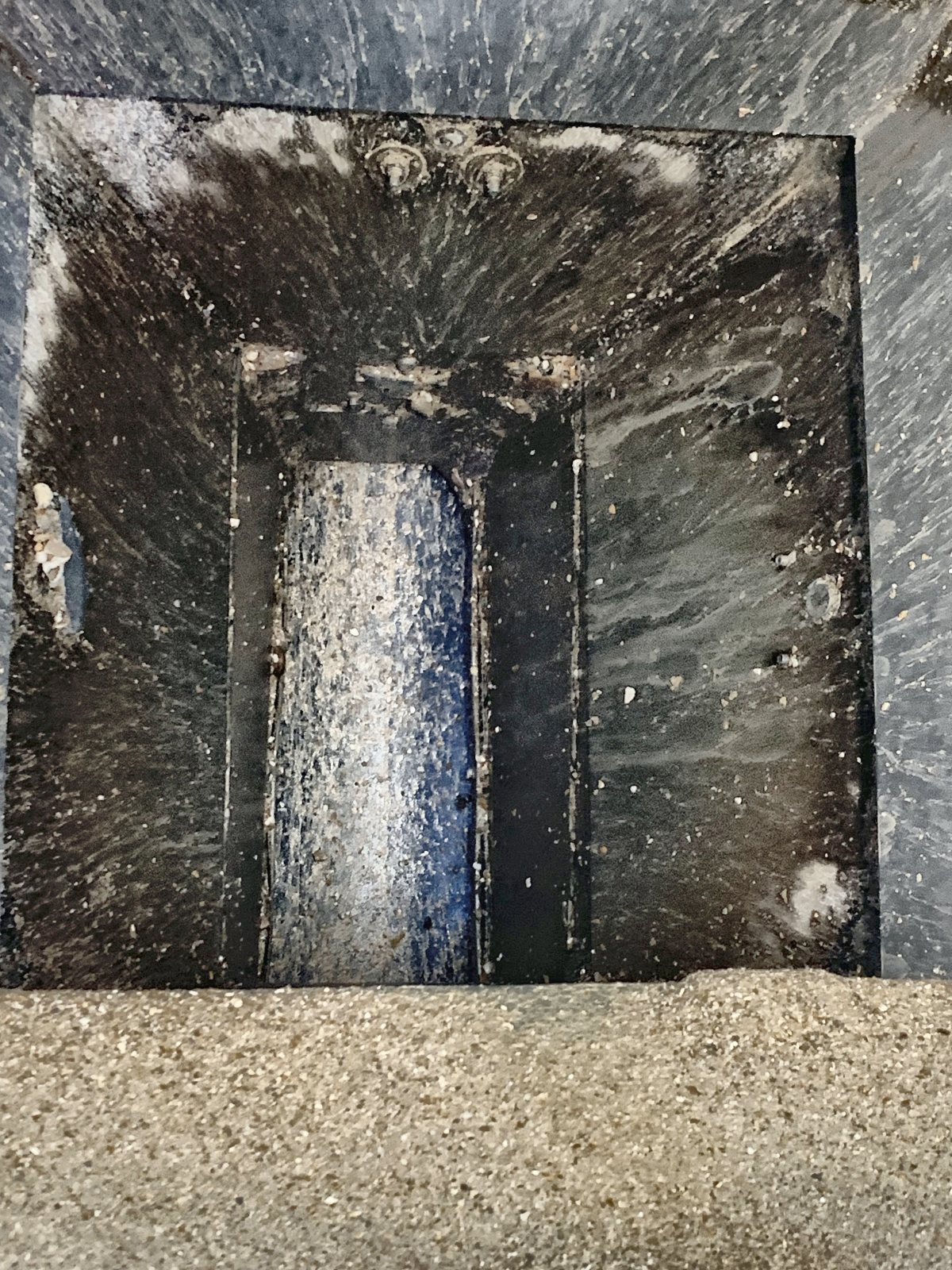
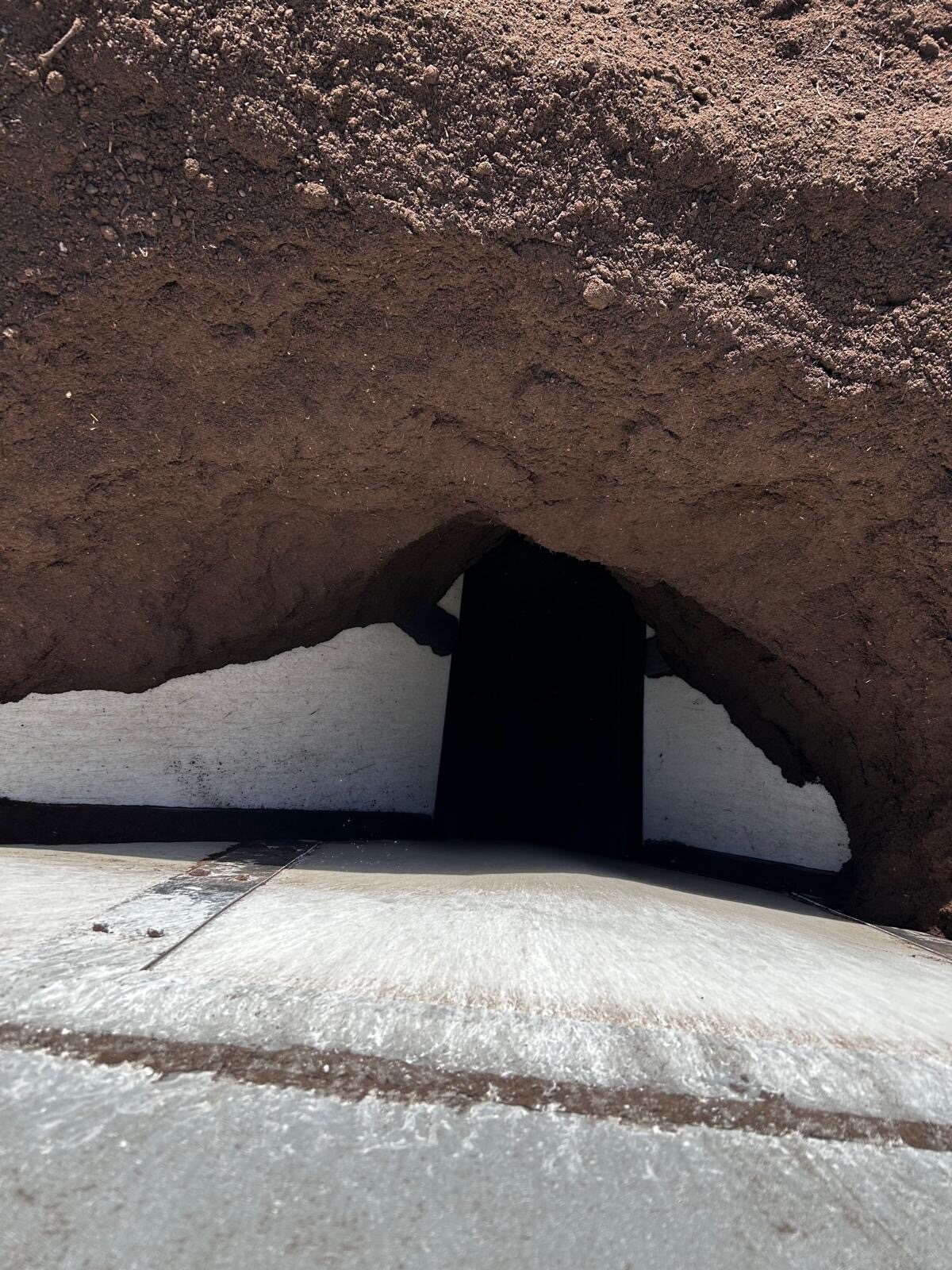
Soil bridging over the outlet of a bagging plant hopper
BeforeDamp soil bridged over the hopper outlet
Soil hopper with clean walls and material flowing after AirSweep
AfterWalls swept clean and the soil flowing to the outlet

Case study: a compost and soil bagging plant had a hopper that bridged repeatedly, especially in cold, wet weather. Vibrators had already been fitted but did not cure it, and the loader operator was still hammering and rodding the hopper above a moving conveyor. Four AirSweep nozzles, designed by IPT with Control Concepts, now keep the soil flowing. Read the soil hopper case study.

Silo Bridging Questions

How do you stop silo bridging?

Either change the vessel so material can flow freely, by steepening the cone, enlarging the outlet or lining the walls, or keep the material near the walls moving so an arch cannot form, using a flow aid such as AirSweep. Which is right depends on the material, the vessel and how it is used.

What is the difference between bridging and ratholing?

Bridging is an arch of material across the outlet, so nothing flows. Ratholing is a narrow flow channel above the outlet with stagnant material left around the walls, so flow stops once the channel empties.

Can vibrators make silo bridging worse?

Yes. Vibration can compact damp or cohesive materials such as soil, clay and some powders, making the bridge stronger. It can also fatigue welds and the vessel wall over time.

Is it safe to enter a silo to clear a blockage?

No. A bridge or rathole can collapse without warning and bury anyone inside or on top of the material. Silos are confined spaces, and blockages should be cleared from outside the vessel.

Can bridging be fixed without modifying the silo?

Often, yes. Flow aids such as AirSweep are fitted through the vessel wall and keep material moving without changing the vessel's shape. Nozzles can be fitted to steel, concrete, fibreglass and wooden vessels.

Which materials are most likely to bridge?

Damp, sticky or fine materials such as soil, clay, compost, damp sand, filter cake and fine powders form cohesive arches. Flat, long or fibrous materials such as wood chip and biomass form interlocking arches over small outlets.

Tell Us About Your Silo or Hopper

We will come back with the options

Fill in what you know. Fields marked * are needed. For a full proposal, open the application details as well. A drawing or sketch of the vessel with dimensions, and photos, help most: attach them once your email or WhatsApp opens.

The problem
Your details
Full application details (optional, helps us quote)

These follow the Control Concepts application data sheet. Fill in what you know; we will ask about the rest.

Material
Vessel
Flow
Controls and air supply

AirSweep® is a registered trademark of Control Concepts USA.